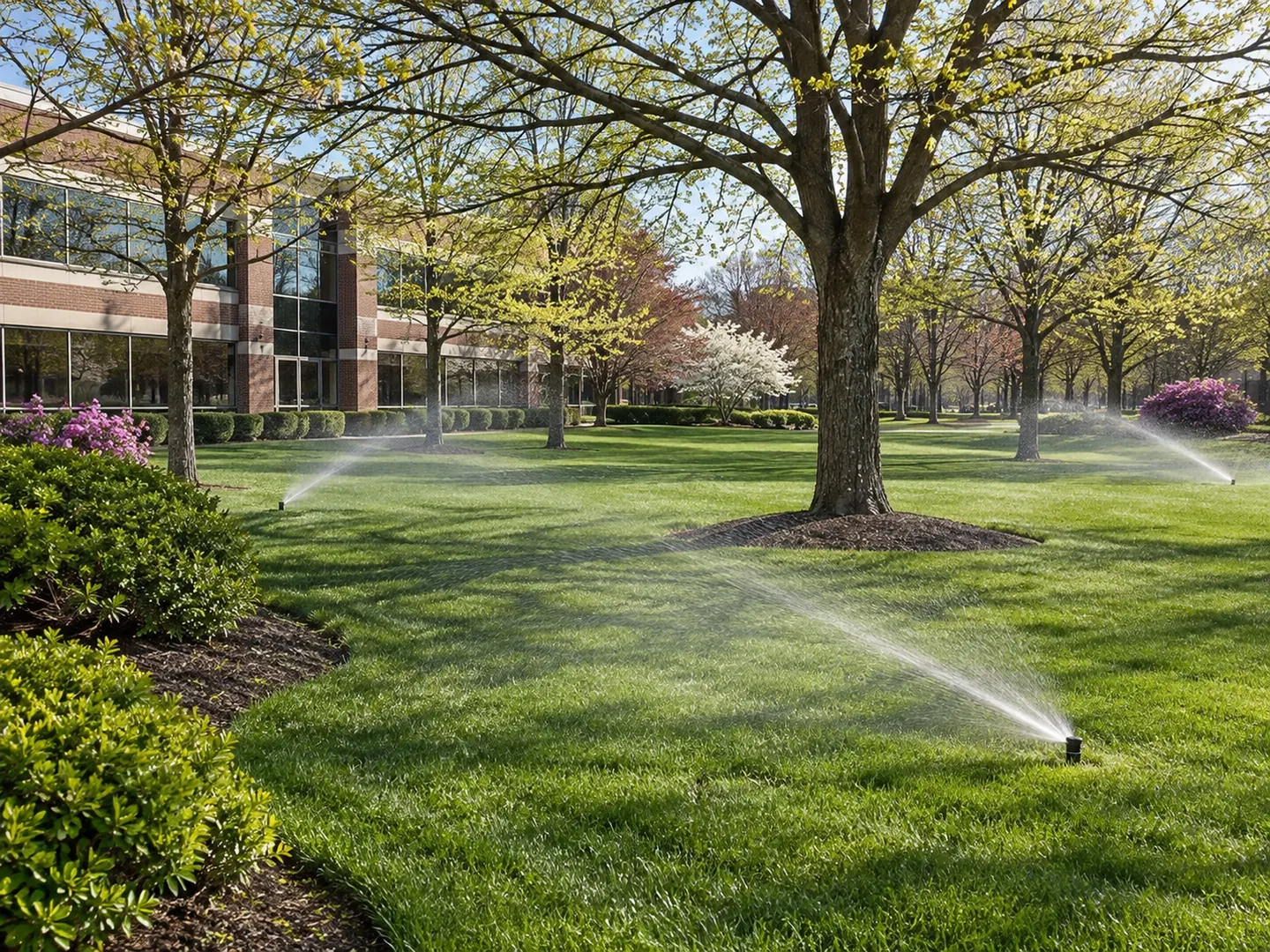
Short answer: In Monmouth County, commercial start-ups usually run from early April into May, once hard freezes are past. We charge the system slowly, test every zone, repair winter damage, set the controller and give you a written report.
What a commercial start-up includes
- Slow charge. Open the main slowly to avoid water hammer that cracks fittings and backflow parts.
- Backflow check. Confirm the device is reassembled and holding. Schedule the annual certified test if it's due.
- Zone-by-zone run. Every zone, every head. Look for broken heads, sunken heads, leaks, misaligned spray onto walks, parking lots and buildings.
- Controller programming. Set run times for spring, confirm the clock, check the rain sensor, and update any weather-based settings.
- Written report. Zones tested, problems found, what we fixed, and a priced list of anything that needs approval.
Why timing matters
Starting too early risks a late frost cracking pipes and backflow devices that are now full of water. Starting too late means new plantings and sod go thirsty during the first warm stretch. We schedule commercial sites by exposure — sunny retail parking islands and new installs first, shaded corporate lawns later.
Common winter damage we find
- Cracked heads and swing joints from plows and frost heave
- Backflow device damage (if the system wasn't drained properly)
- Heads buried by mulch or topdressing from fall cleanups
- Controller clocks reset after power outages
Start-ups are included in every maintenance contract, or can be booked on their own.
Frequently asked questions
When should commercial irrigation be turned on in NJ?
Most Monmouth County properties start between early April and early May. We watch the forecast and avoid charging systems ahead of a hard freeze.
How long does a commercial start-up take?
A small office site can take an hour or two. A large HOA or campus with many controllers can take a full day or more. You'll get a time estimate with the quote.
Is the backflow test part of the start-up?
It's often done on the same visit. The test itself must be done by a certified backflow tester, and results go to your water supplier.