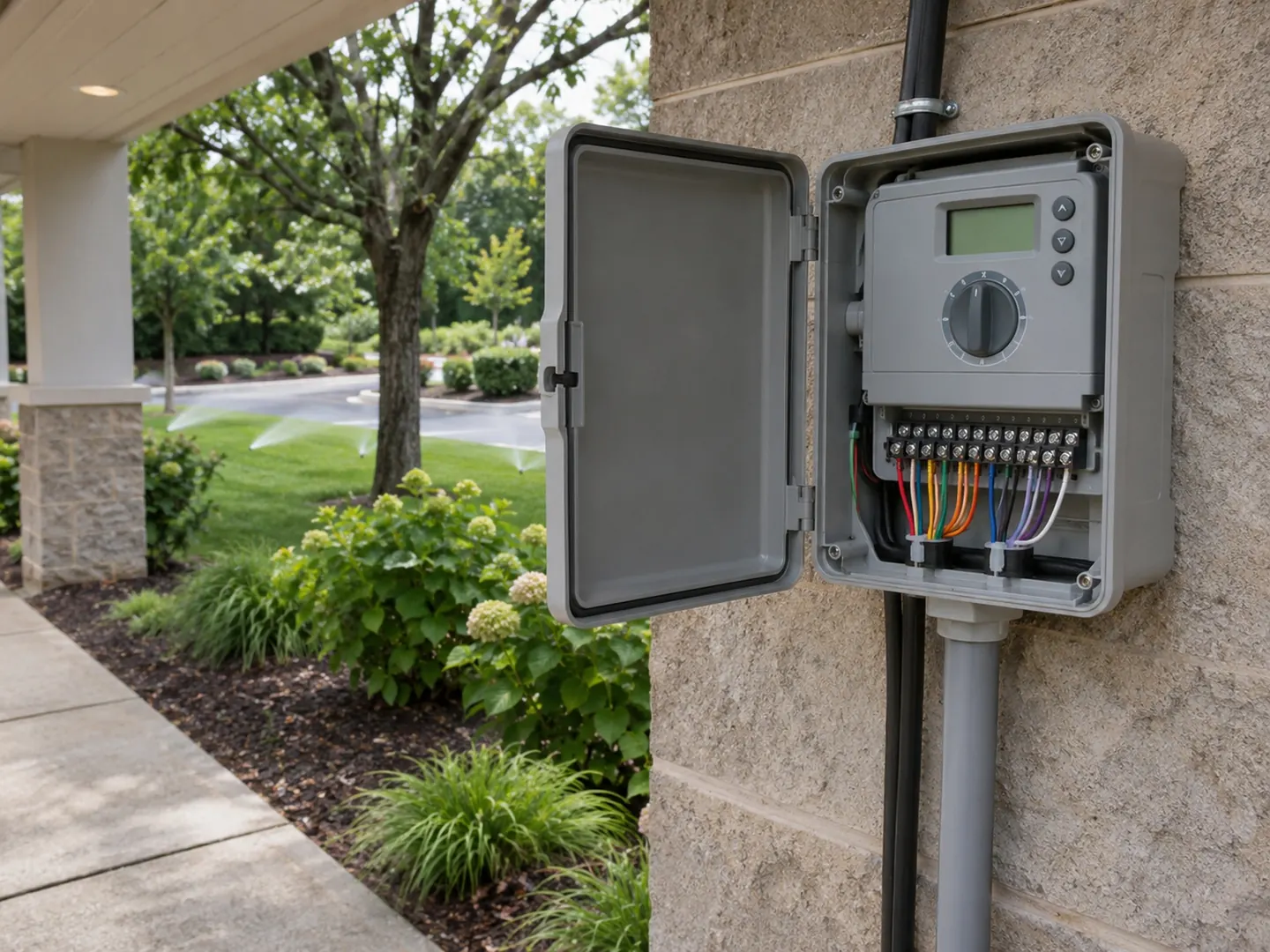
Short answer: A smart controller adjusts watering automatically using local weather data, and can be managed from a phone or browser. On commercial sites it's usually the single fastest way to cut irrigation water use and catch leaks early.
What a smart controller does
- Weather-based scheduling — adjusts run times for heat, rain and season automatically
- Remote access — we (and you) can change schedules without a site visit
- Flow sensing — detects a broken head or main line leak and shuts the zone off
- Alerts — email or text when something's wrong
- Multi-site dashboards — see every property in one place
When an upgrade makes sense
- Your controller is a basic clock timer that runs the same schedule all season
- Water bills are high or unpredictable
- You manage several properties and want one view of all of them
- Someone keeps turning the system up (or off) by hand
Pair it with drip and nozzle upgrades
The controller sets when and how long. High-efficiency nozzles and drip irrigation improve how evenly water lands. The best savings come from doing both — see our audit and retrofit service.
EPA WaterSense
We recommend WaterSense-labeled weather-based controllers where they fit the system. Ask your water supplier whether rebates are currently available.
Frequently asked questions
Will a smart controller work with our existing system?
Usually yes. Most commercial systems can swap the controller without changing valves or wiring. We'll confirm zone count and wiring on the site walk.
Who manages the controller after install?
Your choice. We can manage it as part of your maintenance contract, or train your facility team and hand over access.
Do smart controllers replace the rain sensor?
Many weather-based controllers can pause for rain, but we still install or keep a rain sensor to meet NJ requirements for automatic systems.