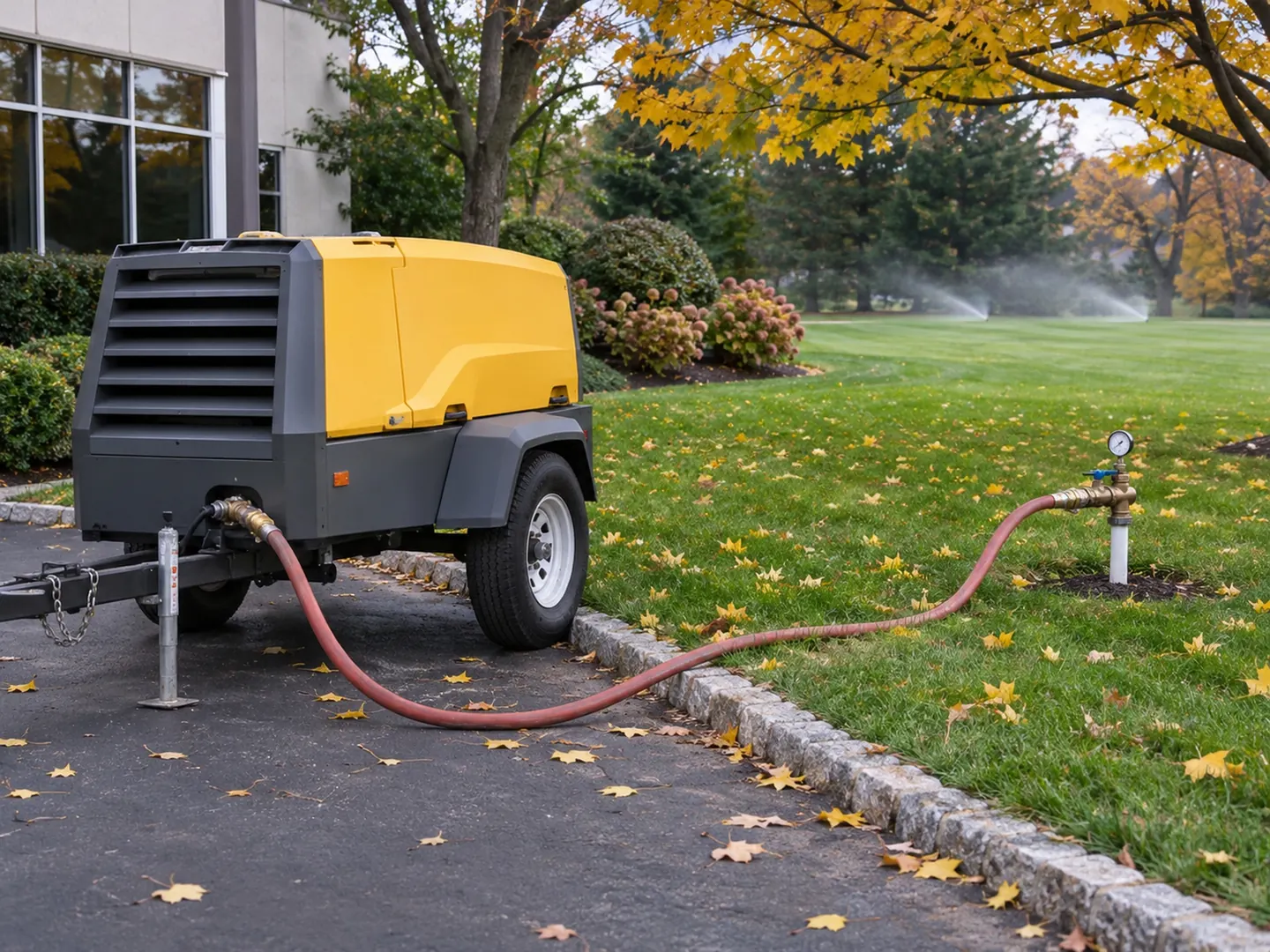
Short answer: In Monmouth County, winterize between late October and mid-November. We shut off and drain the backflow device, blow every zone out with properly sized compressed air, and set the controller to off or rain mode.
Our winterization process
- Shut the main and open drains where the system has them.
- Blow out every zone with a tow-behind compressor sized for commercial systems — larger lines need more air volume than a residential compressor delivers.
- Drain and protect the backflow device. Open test cocks and ball valves to the half-open position so trapped water can't crack the body.
- Controller to off (or rain mode) so it doesn't try to run in January.
- Record it. Date, zones cleared, issues to fix in spring.
Why commercial systems need extra care
Commercial systems have longer runs, larger pipe and more zones than a home system. Under-sized air leaves water in low spots. Over-pressurizing damages heads and fittings. We regulate air pressure and work zone by zone until each one runs dry.
Book early
Fall slots fill fast once the first frost is in the forecast. Contract customers are scheduled automatically. Others should request a winterization quote by mid-October.
Frequently asked questions
When should commercial sprinklers be winterized in Monmouth County?
Late October to mid-November, before a sustained hard freeze. Earlier is safer for exposed backflow devices.
What happens if we skip winterization?
Water left in pipes, heads and the backflow device can freeze and crack them. Backflow devices are usually the most expensive single part to replace.
Do you winterize backflow devices too?
Yes. We drain the device and leave the valves in a safe position. Above-ground devices can also be insulated with a bag or enclosure on request.