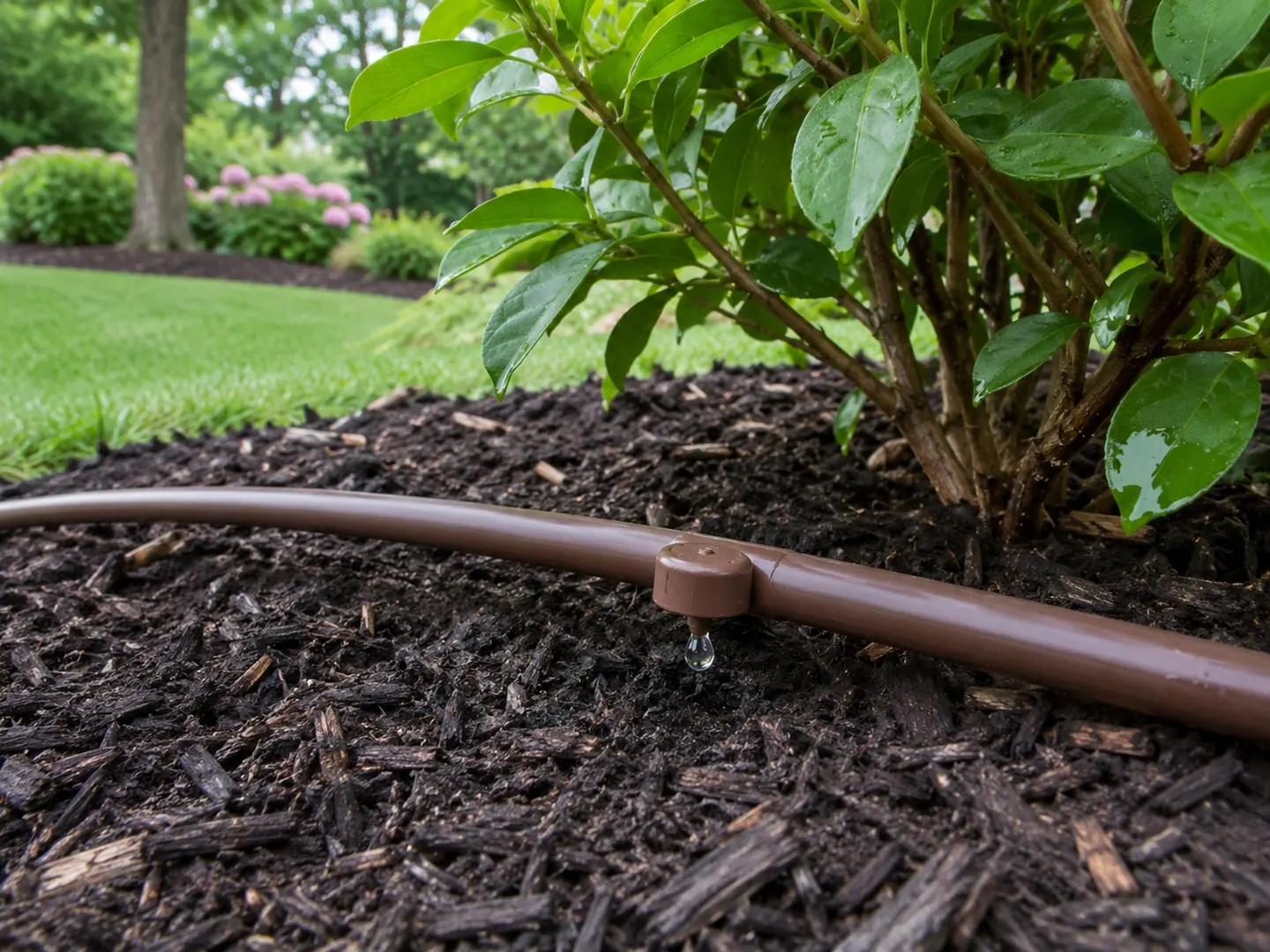
Short answer: Drip irrigation delivers water slowly at the soil line through tubing and emitters. On commercial sites it's the right choice for shrub beds, planters, parking islands and narrow strips where spray heads waste water and wet pavement.
Where drip works best
- Foundation beds along buildings (keeps walls and windows dry)
- Parking lot islands and medians
- Raised planters and entrance containers
- Narrow strips under 4 feet wide
- New tree plantings
Benefits for commercial properties
- Less water — far less lost to wind, evaporation and runoff than spray
- Less liability — no wet sidewalks or icy patches from overspray
- Healthier plants — dry leaves mean less disease
- Cleaner buildings — no water staining on brick and glass
Converting from spray
Many spray zones in beds can be converted to drip using the existing valve and pipe, with a filter and pressure regulator added. We'll tell you which zones are worth converting during an audit or site walk.
Maintenance
Drip needs flushing, filter cleaning and occasional emitter checks — all included in our maintenance contracts.
Frequently asked questions
Can drip be added to an existing commercial system?
Usually yes. Bed zones can often be converted using the existing valves, with a filter and pressure regulator added.
Does drip work for lawns?
Subsurface drip can, but for most commercial turf, efficient rotary heads are the better value. Drip is best for beds, planters and trees.
Does drip need to be winterized?
Yes. Drip zones are drained and cleared with the rest of the system each fall.